
The People Who Turn a Club Into a Community
Leadership Doesn't Always Come With a Title
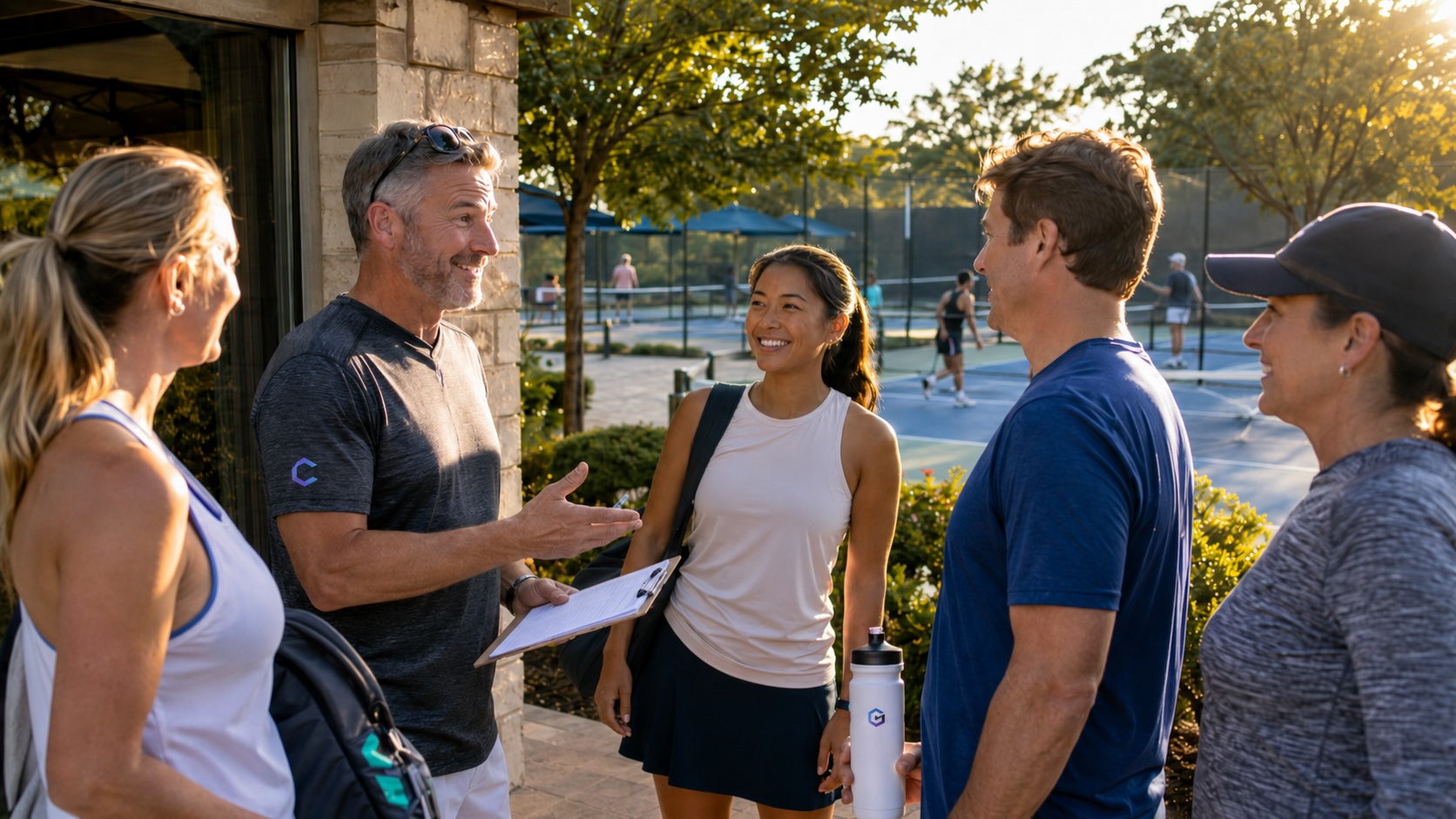
Typically, clubs have people who quietly influence the experience of everyone around them. They are the member who welcomes someone new into a doubles group, the league captain who makes sure nobody feels left out, the committee member who organizes an event, or the player who notices someone standing alone and invites them onto a court. They may never appear on an organizational chart, but their impact on culture can be enormous. These informal community leaders help determine whether a club feels welcoming or intimidating, connected or fragmented, vibrant or transactional. For HOAs, municipalities, country clubs, member-owned clubs, and racquet facilities, recognizing these people matters because member experience is not created by staff alone. It is created through hundreds of small interactions between members, and the people who consistently make those interactions better can become some of the organization's greatest assets.
Community Leaders Create Connections That Programming Alone Cannot
A club can offer a full calendar of leagues, clinics, tournaments, mixers, and social events and still struggle to create a genuine sense of belonging. Programming creates opportunities for interaction, but people create relationships. A new member can register for a doubles mixer and still leave without meeting anyone they would feel comfortable contacting for another game. The difference is often a community leader who makes introductions, organizes the next match, adds someone to a group conversation, or simply remembers their name the following week. These seemingly small actions reduce one of the biggest barriers to participation: not knowing where you fit. Matchmaking tools, group communication, leagues, ladders, and events can make connections easier to initiate, but the strongest communities combine those systems with people who actively bring others into the experience. Technology can create the opportunity to connect. Community leaders help turn that opportunity into a relationship.
The Best Leaders Multiply Participation
Community leaders do more than participate themselves. They cause other people to participate. A strong league captain can turn eight individual players into a group that plays together for years. An enthusiastic pickleball organizer might introduce dozens of residents to open play. A parent who becomes involved in junior programming can help connect families who eventually participate throughout the club. An experienced player who regularly welcomes beginners can make an introductory clinic feel far less intimidating. That multiplier effect is incredibly valuable because participation becomes less dependent on staff continually creating activity from the top down. Members begin creating activity for one another. Healthy organizations recognize this dynamic and make it easier for these leaders to organize matches, communicate with groups, find substitutes, invite players to events, and build communities around shared interests without forcing every interaction through the front desk.
Leadership Should Be Encouraged Without Becoming a Burden
There is a delicate balance between empowering community leaders and unintentionally turning them into unpaid administrators. The person who volunteers to captain a league probably wants to help create a great experience, not spend hours maintaining spreadsheets, collecting payments, sending schedule reminders, tracking scores, and finding substitutes. The more administrative work attached to leadership, the harder it becomes to find people willing to take on those roles, and the greater the likelihood that the same dependable volunteers will eventually burn out. Organizations can prevent this by removing unnecessary work from the people who are helping build the community. Registration, communication, schedules, standings, payments, waivers, substitutions, and other routine tasks should be as automated and self-service as possible. Community leaders should spend their time welcoming people, organizing play, and strengthening relationships rather than performing work that better systems could handle for them.
Not Every Leader Will Raise Their Hand
Some of the most influential people in a community will never volunteer for a committee or ask for a formal leadership role. Their leadership becomes visible through their behavior. They participate frequently, bring other people into activities, help newer members, organize informal groups, and consistently contribute to the culture around them. Organizations that pay attention to these patterns can identify potential ambassadors who might otherwise go unnoticed. Participation data can help reveal members who repeatedly join programs, leagues, events, and social play, but the numbers should be combined with what staff and other members observe. Someone does not need to be the highest-ranked player or longest-tenured member to become an important community leader. In fact, newer members can sometimes be especially effective because they remember what it felt like to enter the community without already having a network.
Great Communities Give Leaders Room to Lead
Staff and leadership cannot manufacture every friendship, organize every game, or personally welcome every participant. Nor should they try. Their job is to create an environment where connections can happen easily and where members who want to strengthen the community have the tools and freedom to do so. That means communicating openly, making participation easy to discover, connecting people with similar interests and skill levels, and supporting volunteers without overwhelming them with administration.
The strongest communities eventually develop momentum of their own. Members invite other members to play. Captains build leagues people look forward to every season. Parents connect families. Experienced players welcome beginners. New members eventually become the people welcoming someone else. When that cycle begins to repeat itself, engagement no longer depends entirely on programming or facilities. It becomes part of the culture, and the people within the community become one of the most powerful reasons anyone wants to keep coming back.