
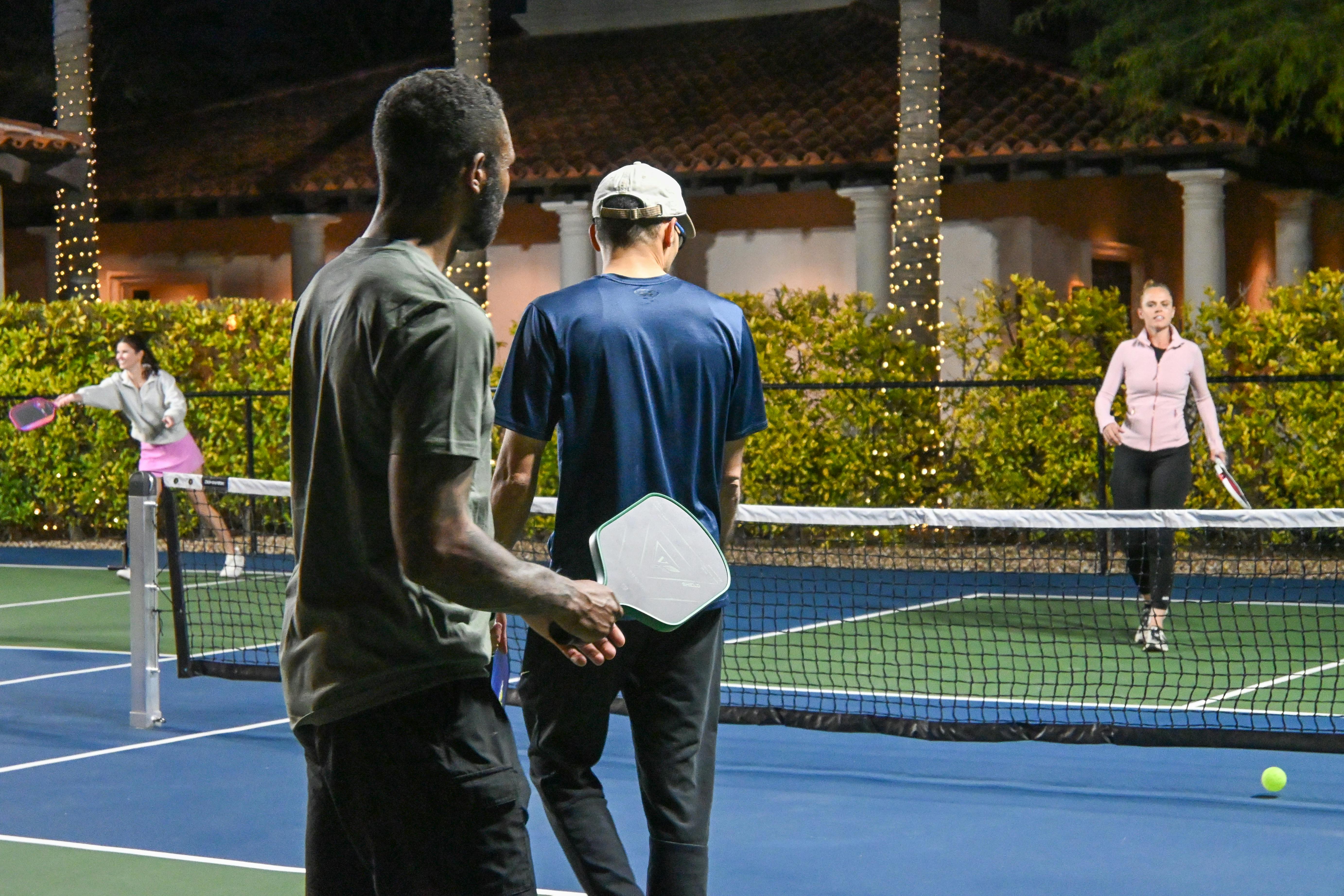
The Pickleball Boom: What Explosive Growth Means for Clubs and Communities
Pickleball has moved far beyond niche status. What began as a backyard game has become one of the fastest-growing sports in North America, with participation expanding across age groups, regions, and types of facilities. From neighborhood parks and homeowner associations to country clubs and dedicated racquet facilities, pickleball is reshaping how communities think about play, programming, and shared spaces.
According to the Sports & Fitness Industry Association (SFIA), pickleball participation has grown by more than 150 percent over the past five years, with millions of new players joining annually. USA Pickleball reports continued year-over-year growth, driven by accessibility, social appeal, and low barriers to entry. Municipal recreation departments, private clubs, and community associations are all experiencing similar trends: more interest, more players, and more demand for organized opportunities to play.
While this growth is overwhelmingly positive, it also introduces new challenges. Increased demand affects court availability, staffing, communication, scheduling, and member or resident expectations. Communities that once managed racquet sports with minimal structure are now navigating a level of complexity that requires more thoughtful coordination.
This article explores why pickleball is growing so rapidly, how that growth impacts clubs and communities, and what organizations can do to support participation while maintaining a positive experience for everyone involved.
Why Pickleball Is Growing So Fast
Pickleball’s growth is not accidental. Several structural and cultural factors make it uniquely suited to modern communities.
Accessibility Across Ages and Skill Levels
Unlike many competitive sports, pickleball is easy to learn and forgiving for beginners. The court is smaller than a tennis court, the paddle is lightweight, and the underhand serve lowers the physical barrier to entry. This makes it appealing to older adults, families, and people returning to sports after long breaks.
At the same time, pickleball offers depth for competitive players. Organized leagues, rating systems, and tournaments provide pathways for progression, which keeps experienced players engaged.
Social by Design
Pickleball is inherently social. Doubles play is common, games are shorter, and rotation formats allow players to meet new partners frequently. This social structure aligns well with community-based settings like HOAs, municipal facilities, and clubs focused on member engagement rather than elite competition alone.
For many participants, pickleball is as much about connection as it is about sport.
Efficient Use of Space
Four pickleball courts can often fit within the footprint of one tennis court. For municipalities and clubs managing limited land or repurposing underused spaces, pickleball offers a high return on space utilization. This efficiency has accelerated adoption in urban areas and shared facilities.
What Growth Looks Like on the Ground
While participation numbers tell part of the story, the real impact of pickleball growth is felt in day-to-day operations.
Increased Demand for Courts
As interest rises, court availability becomes a primary concern. Communities often see peak-hour congestion, waitlists, and frustration when players cannot find open courts. This is especially common in shared environments where pickleball, tennis, and other activities coexist.
Municipal recreation departments have reported increased complaints and scheduling conflicts tied directly to pickleball demand, according to coverage from outlets like NPR and local government associations.
More Programming Expectations
As players become more invested, they look for more than open play. Clinics, ladders, leagues, social mixers, and tournaments become natural extensions of participation. Organizing these activities requires coordination, communication, and consistency.
Without clear systems, staff and volunteers often rely on spreadsheets, email chains, printed sign-up sheets, or social media groups. These approaches work temporarily but tend to break down as participation scales.
Diverse Player Needs
Pickleball attracts a wide range of participants, from casual recreational players to highly competitive athletes. Managing skill-based play, fair court rotation, and inclusive programming becomes more complex as numbers grow.
Communities that fail to structure play thoughtfully risk alienating both beginners and advanced players.
Operational Strain Beneath the Surface
Behind every thriving pickleball program is an operational layer that often goes unnoticed until it starts to strain.
Fragmented Systems
Many communities manage different aspects of play using separate tools. Court reservations might live in one system, program sign-ups in another, and communication through email or third-party messaging apps. This fragmentation creates blind spots and inefficiencies.
Staff and volunteers spend time reconciling information instead of focusing on programming and engagement.
Manual Processes
Manual coordination becomes a bottleneck as participation increases. Updating schedules, managing waitlists, tracking attendance, and answering repetitive questions can consume significant time.
According to Club Industry and Club & Resort Business publications, administrative workload is one of the most cited pain points for club staff as participation rises across recreational programs.
Limited Visibility
Without centralized data, it is difficult to answer basic questions:
- Which courts are most utilized?
- Which programs drive the highest participation?
- When do conflicts or drop-offs occur?
Lack of visibility makes it harder to plan, justify investments, or improve the experience over time.
Why Member and Resident Experience Matters More Than Ever
Pickleball’s growth has raised expectations. Players are no longer just grateful for access; they expect clarity, fairness, and ease.
Friction Impacts Retention
Research in recreation management consistently shows that friction reduces participation. Confusing schedules, inconsistent communication, and perceived unfairness in access can push people away, even when interest in the sport remains high.
This applies equally to private clubs concerned about member satisfaction and municipalities focused on equitable access for residents.
Engagement Drives Long-Term Participation
Clubs and communities that provide structured opportunities to play tend to see higher retention. Organized leagues, social events, and clear pathways for improvement help players form habits and relationships.
Harvard Health Publishing has highlighted the role of social connection in sustaining physical activity, noting that people are more likely to stay active when participation is tied to community.
Preparing for Sustainable Growth
The pickleball boom shows no signs of slowing. SFIA projections and municipal planning reports suggest continued expansion over the next decade. Preparing for that growth requires moving beyond short-term fixes.
Centralized Coordination
As participation scales, centralized coordination becomes essential. Communities benefit from having court schedules, programs, communication, and participation data aligned in one place. This reduces duplication, errors, and staff burnout.
Clear Communication
Players want to know where to go, when to play, and how to participate. Clear, consistent communication builds trust and reduces frustration. This is especially important in mixed-use environments where different groups share facilities.
Flexible Programming
No two communities are the same. Successful pickleball programs adapt to local needs, whether that means drop-in play for residents, structured leagues for members, or instructional clinics for beginners.
Flexibility requires systems that can evolve without constant reinvention.
Pickleball as a Catalyst for Broader Change
Interestingly, pickleball often becomes the catalyst that exposes broader operational gaps. Communities may realize that the same challenges affecting pickleball also affect tennis, lessons, events, and other amenities.
In this sense, pickleball is not just a growth opportunity; it is a stress test. It reveals whether existing processes can support modern participation patterns.
Organizations that respond by modernizing how they manage operations and engagement tend to be better positioned not just for pickleball, but for the future of community-based recreation overall.
Looking Ahead
Pickleball’s rise reflects a broader shift toward social, accessible, and community-driven sports. For HOAs, municipalities, country clubs, and racquet clubs alike, the challenge is no longer whether to support pickleball, but how to do so sustainably.
As demand grows, the communities that thrive will be those that balance access with organization, simplicity with structure, and operational efficiency with human connection.
Pickleball brings people together. Supporting it well requires systems and approaches that do the same.