
The Volunteer Leadership Challenge: Preventing Burnout in Clubs and Communities
Great Communities Are Built by People Who Volunteer Their Time
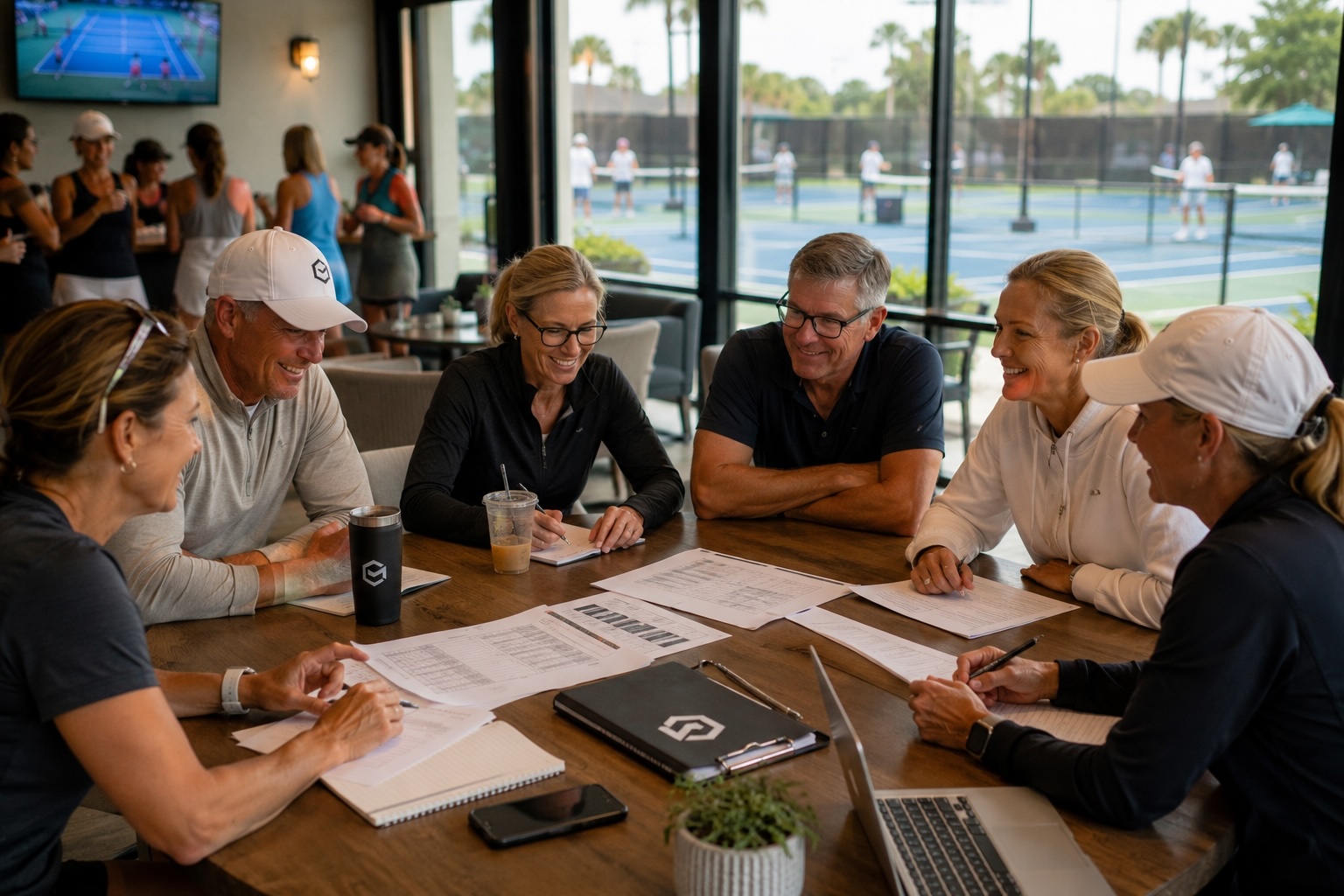
Behind almost every successful racquet sports community is a group of people whose work is largely invisible. They serve on HOA boards, country club committees, member-owned club boards, tennis and pickleball committees, organize leagues, captain teams, coordinate tournaments, welcome new members, and volunteer countless hours to create experiences for everyone else.
Very few of these people see themselves as volunteers first. They're members who care enough about their community to raise their hand and help. The problem is that as participation continues to grow across tennis, pickleball, and padel, so do the expectations placed on those same individuals. What began as an opportunity to give back can slowly become a second job, filled with administrative work, scheduling issues, communication challenges, and member requests. Communities rarely struggle because they suddenly lose all of their volunteers. They struggle because the people carrying the largest share of the workload eventually burn out.
The Work Has Changed
The role of volunteer leaders has changed dramatically over the past decade. Years ago, organizing a league or serving on a committee often meant sending a few emails, maintaining a spreadsheet, and coordinating with a handful of members. Today, volunteers are expected to manage registrations, answer questions across multiple communication channels, coordinate waitlists, resolve court conflicts, support events, and respond quickly to member requests. At the same time, members have grown accustomed to the seamless digital experiences they receive everywhere else, creating expectations that are difficult to meet with manual processes.
The issue isn't that people are unwilling to help. It's that the amount of work has grown faster than the systems supporting it. Many organizations continue operating with processes that were designed for communities half their current size. As participation increases, those processes become increasingly dependent on the personal time and dedication of a small group of leaders.
Burnout Affects the Entire Community
Burnout rarely announces itself. It usually appears as slower responses, fewer new ideas, canceled events, or committee members deciding not to serve another term. When experienced volunteers step away, they often take years of institutional knowledge with them. The next person inherits responsibilities without the context, relationships, or systems that made those responsibilities manageable.
The impact extends well beyond the volunteer. Programs become harder to sustain, communication becomes inconsistent, and member satisfaction begins to decline. Communities sometimes assume they have an engagement problem when, in reality, they have a leadership capacity problem. The people responsible for creating engagement simply don't have enough time left to focus on it.
Great Systems Allow Leaders to Lead
The healthiest organizations don't ask volunteers to work harder. They make it easier for them to succeed.
Administrative tasks like registrations, scheduling, communication, substitutions, waivers, reporting, and event coordination shouldn't consume the majority of a volunteer's time. Those responsibilities are necessary, but they shouldn't prevent committee members and board leaders from focusing on what only people can do: welcoming new members, building relationships, solving problems thoughtfully, and creating a stronger sense of community.
As clubs and communities grow, consistent systems also make leadership transitions much easier. Knowledge is shared instead of living in someone's inbox or spreadsheet, new committee members become productive more quickly, and organizations become less dependent on any single individual. That continuity benefits everyone, from board members and volunteers to staff and members.
Building the Next Generation of Leaders
Every organization eventually faces leadership turnover. Board members rotate off. Committee chairs step aside. League captains move away. Healthy communities plan for this long before it happens.
The strongest clubs are constantly developing future leaders by giving members opportunities to contribute in meaningful but manageable ways. Someone who helps organize one social event today may become tomorrow's committee chair. A league participant may eventually become a captain. A committee member may later serve on the board. Leadership becomes part of the culture rather than the responsibility of a handful of people.
Communities don't thrive because they have extraordinary volunteers. They thrive because they create an environment where people want to contribute and where contributing doesn't require sacrificing every free evening and weekend. As participation continues to grow, reducing administrative burden and supporting volunteer leaders may become one of the most important investments a club or community can make. When leaders have more time to build relationships instead of managing logistics, everyone benefits.