
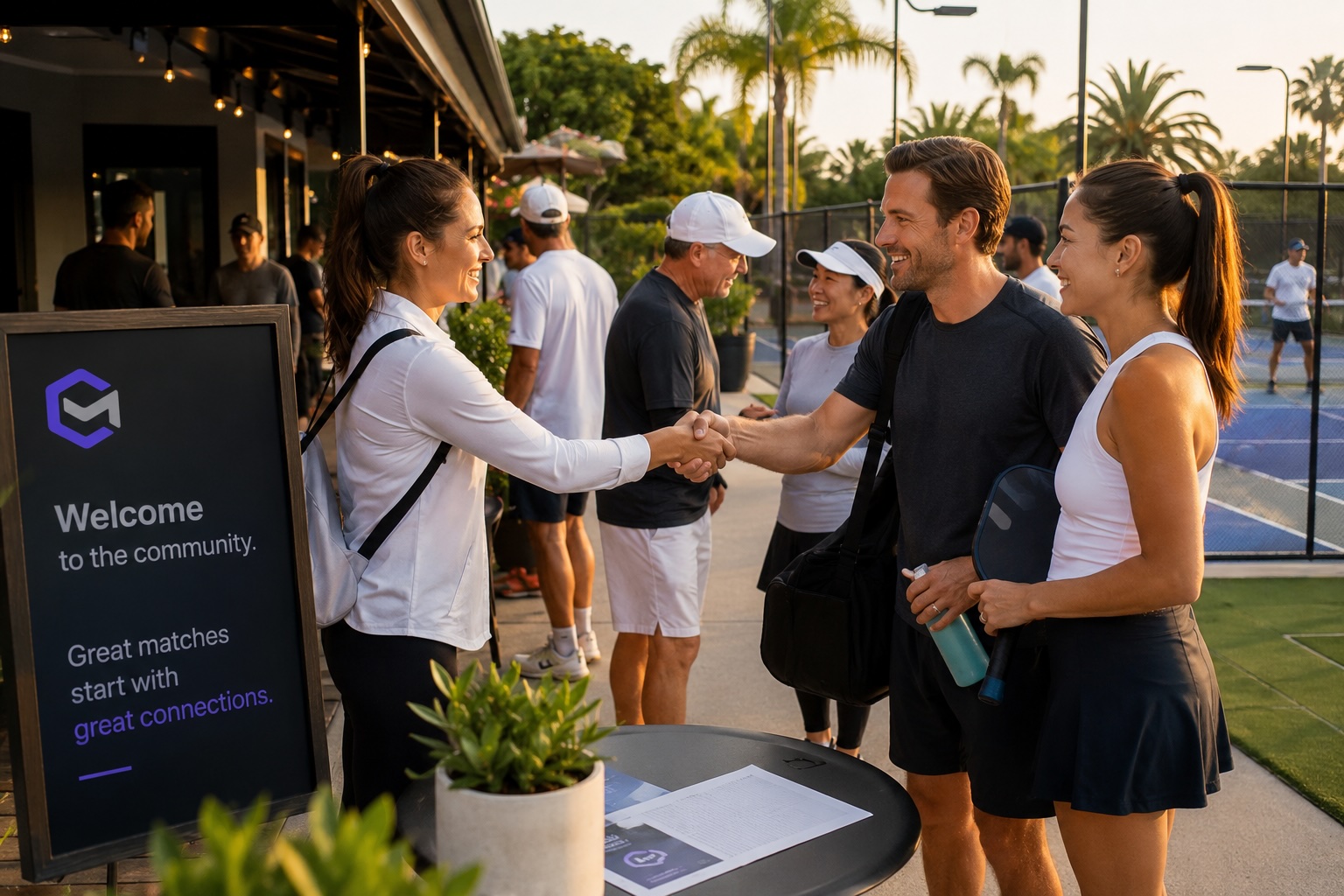
Why New Members Leave and How Clubs Can Improve Onboarding
The Retention Problem Most Clubs Don't See
Long before a member decides whether to renew, they're deciding something far more important: whether they belong.
One of the most common misconceptions in club management is that retention problems begin when memberships expire. In reality, many retention challenges start much earlier. A new member joins, explores the facility, participates a few times, and then gradually becomes less active. They aren't unhappy with the courts, the amenities, or even the membership itself. More often, they simply never become connected enough to make participation part of their routine.
Because this process happens gradually, it's easy to miss. There is rarely a complaint, cancellation, or obvious signal that something is wrong. Yet over time, these members become less engaged, participate less frequently, and contribute less to the overall energy of the community. By the time an organization notices the problem, the opportunity to solve it has often passed.
Membership Doesn't Create Belonging
Many clubs are exceptionally good at attracting members but surprisingly inconsistent at integrating them. New members receive facility tours, welcome emails, reservation instructions, and information about available amenities. What they often don't receive is a clear path toward participation.
From the organization's perspective, opportunities are everywhere. There are leagues, clinics, social events, tournaments, open play sessions, instructional programs, and countless ways to get involved. Existing members know which activities fit different skill levels, which groups are welcoming to newcomers, and who to contact when they're looking for a game. New members know none of that.
This is where onboarding either succeeds or fails. Membership gives someone access to a community. Onboarding helps them become part of it.
The distinction is particularly important in racquet sports because participation is inherently social. Tennis, pickleball, and padel all depend on connection. Players need partners, opponents, instructors, teammates, and groups. Someone who quickly develops those connections is likely to remain active. Someone who struggles to find them often becomes disengaged, regardless of how good the facilities may be.
The First 90 Days Matter More Than Most People Realize
Research across membership organizations consistently shows that early engagement is one of the strongest predictors of long-term retention. The first few months are when habits are formed, relationships begin to develop, and members decide whether participation will become part of their lifestyle.
Unfortunately, many organizations take a passive approach. They assume that if enough opportunities exist, people will naturally discover them. While that certainly happens for some members, many others become overwhelmed by choice or uncertain about where to begin. They may be interested in joining a league but worry about their skill level. They may want to attend a social event but not know anyone. They may be looking for regular playing partners but have no idea how to find them.
The most successful clubs remove that uncertainty. They don't wait for members to find their place. They actively help them find it. That might mean recommending a clinic, introducing them to a league captain, connecting them with players of similar ability, or simply checking in during the first few weeks. These actions may seem small, but they often determine whether someone becomes a regular participant or remains on the sidelines.
Communication Is Often the Missing Piece
One of the most overlooked barriers to engagement is communication. Not because clubs aren't communicating, but because information is often scattered across too many places.
A new member may receive emails from the club, texts from instructors, updates from league organizers, notices posted on bulletin boards, and invitations through social media groups. Existing members have learned where to look. New members haven't. As a result, opportunities that could have driven engagement are frequently missed.
The strongest communities create clarity. Members know what's happening, how to get involved, and where to go when they need information. More importantly, communication is connected to participation. If someone joins a clinic, they can easily discover related events, leagues, or groups. If they're looking for a game, they can quickly find others who are as well.
This is one of the reasons clubs are increasingly looking for ways to centralize the member experience. When communication, participation, scheduling, and community engagement exist in separate silos, members are forced to do the work of connecting them. When those experiences are more unified, participation becomes significantly easier.
Great Onboarding Creates Momentum
When people think about onboarding, they often focus on delivering information. The best onboarding programs focus on creating momentum.
A successful onboarding experience should answer a few simple questions: Where should I start? Who should I meet? What should I join next?
Every positive interaction builds confidence. A member finds a regular playing partner. They attend a social event and meet new people. They join a clinic and improve their game. They participate in a league and start recognizing familiar faces around the club. Over time, these experiences compound and participation becomes self-sustaining.
The opposite is also true. When members struggle to connect, each missed opportunity makes the next one less likely. Eventually, participation feels like work instead of something they look forward to.
The organizations that consistently retain members understand that onboarding is not a one-time event. It's a process designed to help people build momentum until they become fully integrated into the community.
Final Thoughts
As participation continues to grow across tennis, pickleball, and padel, clubs and communities will continue investing in facilities, programming, and amenities. Those investments matter, but they aren't what ultimately determines whether a member stays engaged.
People remain active when they build relationships, establish routines, and feel connected to the community around them.
The clubs that thrive over the next decade won't simply be the ones that attract new members. They'll be the ones that consistently help those members find their place. Because in the end, retention isn't really about renewals.
It's about belonging.